June 19, 2020 ·
Concept and script: Bram Koehoorn, Luc Wittebol, Max Wittebol
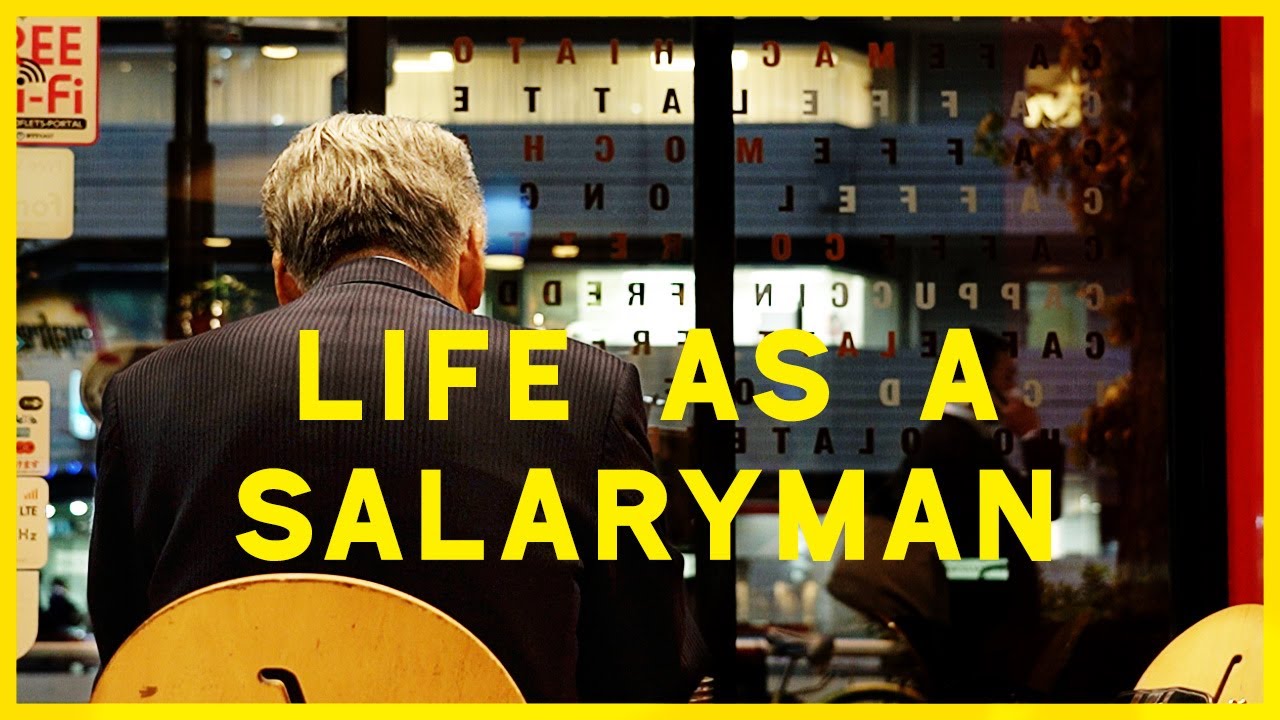
Tokyo, November 2018: a Japanese man reflects on his former life as a salaryman.
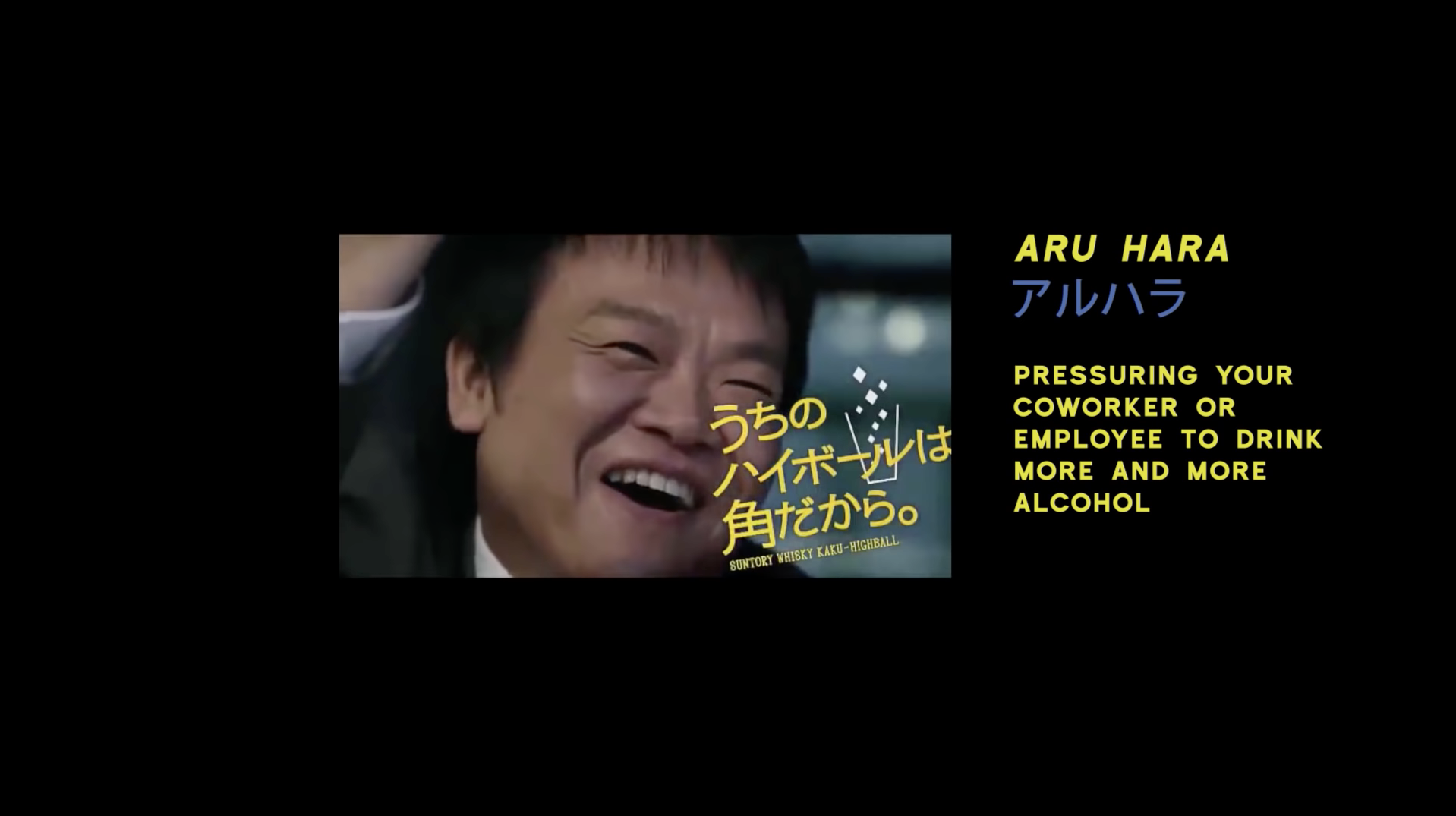
In my opinion, I spoke most frankly with my colleagues after dark. On the work-floor, it felt like few people said what they truly wanted to say, but not in the Izakayas. I remember people talking to each other but I don't recall them stating the truth. Here in Japan, work often transitions into drinking, and when the alcohol flowed, so did the words. It never ceases to amaze me how people change after some drinks and social encouragement, even though taboos remain taboos. We would finish work late in the evening, head straight for the Izakaya and order our dinner accompanied by Highballs...as many as our boss demanded, to the point of harassment. Hence the term, aru-hara.
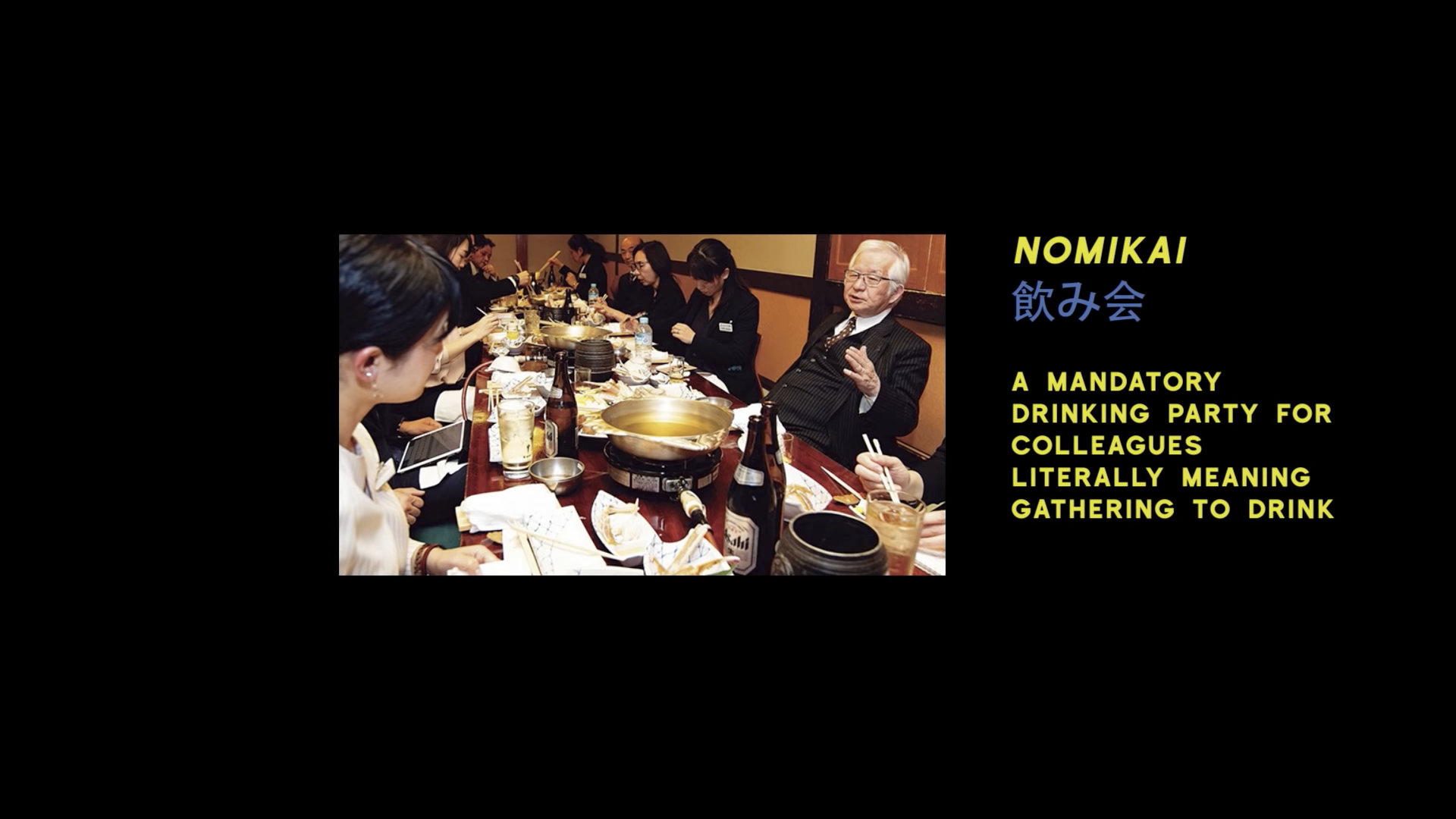
We weren't the only salarymen in the Izakaya. You can recognize us by our suits, but also by looking for who is most drunk. Japanese have all kinds of derogatory names for the suited worker: company livestock, dog of the company, and corporate soldier. A few hours later we would crawl to the station, trying to catch the last train home...to then find ourselves back at the office at 9:00 AM. Although it might sound like fun, these drinking parties are mandatory. We call these parties nomikai.
The companies that organize such occasions tend to have strict rules. Both written and unwritten. Though the unwritten rules sometimes feel mandatory. If you decline, it will reflect poorly on you. In other words: you will suffer loss of face. Combine this with the long working hours, sleep deprivation, and an unhealthy amount of perfectionism and you enter a downward spiral. Being pressured by others isn't exclusive to corporate life, though. No, not at all. You can find this in any hierarchical society. The tendency to dominate is written in our DNA. And this is especially noticeable throughout Japan. Japanese people are very familiar with this. You start at the bottom and work yourself up the ladder. Yet, there will always be someone above you, such as the elderly or your work-related superiors. This class system is reminiscent of the old feudal system. In the sense that there were very few people who weren't dominated by somebody else. From peasants to samurai, from samurai to daimyo, and from daimyo to shogun, I think you can say the hierarchical system we see today finds its roots in the past. But even though these imbalances seem unfair, I personally believe we all strive to be one of the few at the top. To squeeze yourself in all sorts of shapes and sizes to get to places with opportunities. I did exactly the same. Looking for a better life, while leaving some fundamental parts behind. The curious thing about dominance is that it doesn't last. No one stays the leader of the pack forever. And this is necessary to release built-up tension. Yet in our society this doesn't apply. We never confront our superiors head on, leaving all frustrations bottled up. Oh, should we order more drinks? It's always good to talk to strangers I think. I don't have to hold on to the identity that my friends, family, and colleagues have come to expect of me. Oh excuse me, can we have four more beers please?
I think hierarchical structures are necessary, and in some sense, it's impossible to do something without a leader. So that's not the problem with hierarchies. It's the submissiveness in people that causes issues. I've always wondered why the Japanese don't see how submissive they are. They stay silent and simply continue for as long as they possibly can. In the meantime there are plenty of ways to take your mind off things. For we are in Japan, the land of subcultures...karaoke, pachinko, anime, and hentai...everything has a mascot...and commercials are getting weirder and weirder. Take for example a pachinko, or game hall: the sounds inside there are blended together into a deafening white noise. The flickering lights and playful animations pull you into the game. The game itself keeps you hooked. The ideal conditions to distract you from your work. And of course, all the heroic anime that show a protagonist that is never subordinate to anyone. Or think of all the games where you are in control, and where the story never progresses without your influence...taking matters into your own hands, like a true hero.
As I got older I realized that heroism has no place in our modern society. It's becoming less common in this day and age. Some don't even think about it anymore, since we substitute our agency with the agency of fictional characters in manga, books and video games. We take refuge in imaginary worlds, while avoiding confrontation in our own life. All in all, it's a certain form of escapism … tempering the symptoms of excessive domination and stress. And the most frustrating aspect of it all: everything I'm telling you now is common knowledge in Japan, yet it is rarely talked about. I have read recently that some companies come up with ridiculous things like bringing cats, dogs, and even goats into the office in order to reduce the stress levels of their employees...instead of just cutting the so-called mandatory overtime, and introducing a mentality of working 8 hours a day. I believe that's what they have in Europe, right? At the end of their work day, people use the little spare time they have to unwind. Just enough so they can repeat this routine the following day. But for some people this isn't an option anymore, and then the real issues start. Some people avoid facing work and society altogether and rarely go outside again.
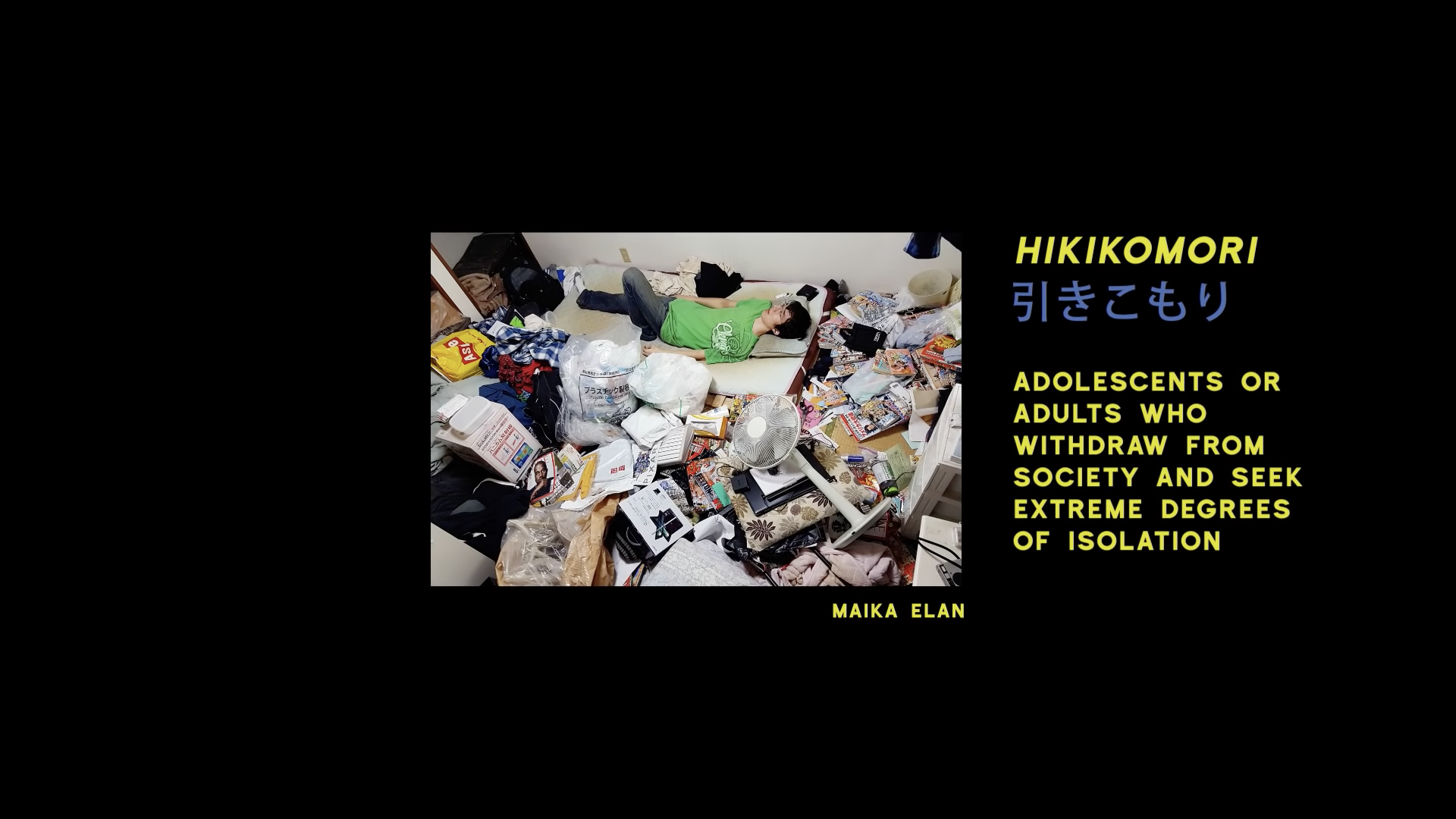
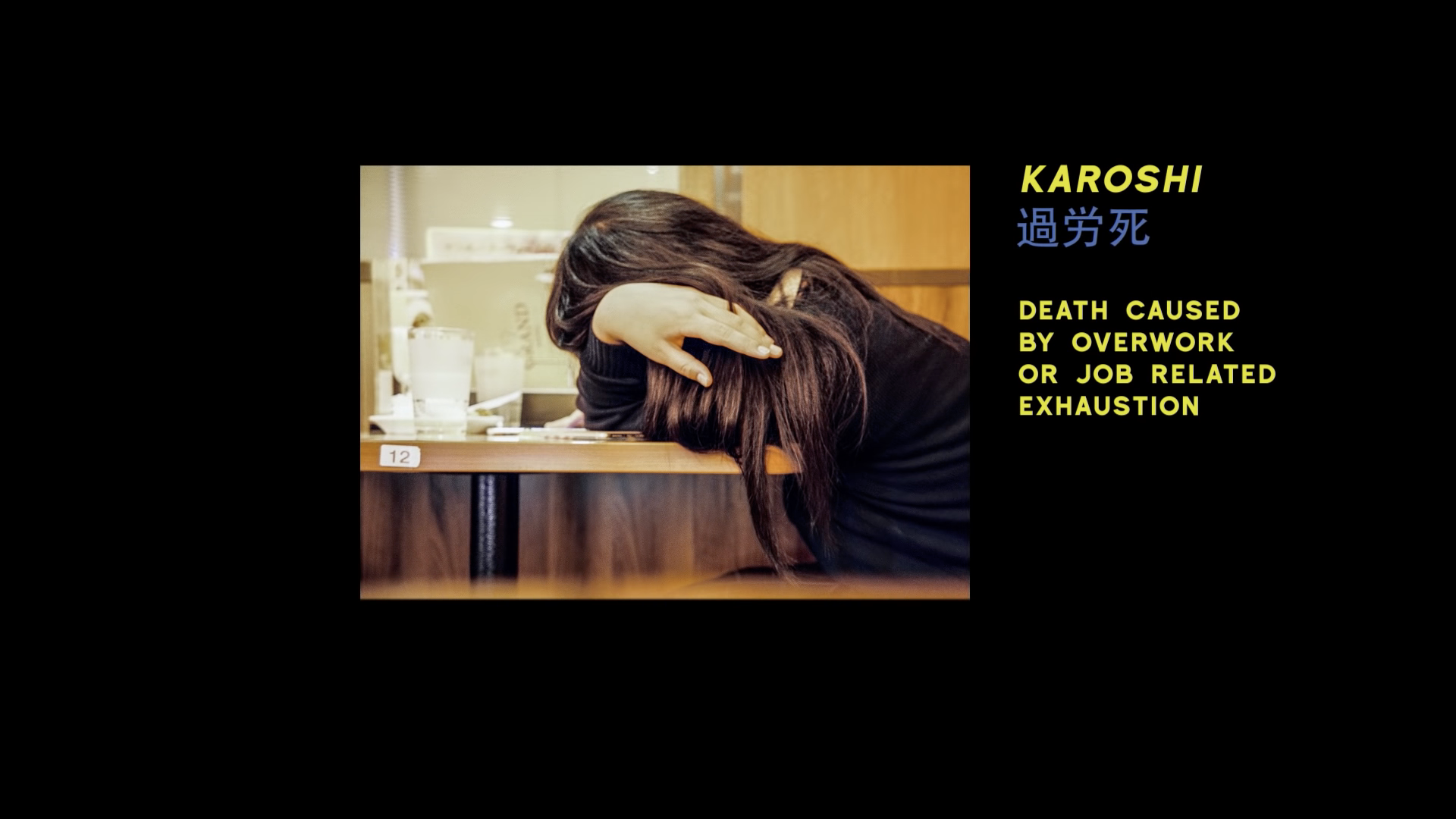
They consider that the better option: to avoid conflict and live in your own world where you decide everything. That's not a surprising consequence for a country that has, for a long time, been the leading developer of personalized technology. Perhaps the most extreme result of work related stress is karoshi.
If you work too much for too long, you start to develop medical conditions. For example: strokes, heart attacks, or mental problems that might lead some people to commit suicide. While this phenomenon has been acknowledged by the government by introducing a hotline for people at risk, on average only a few hundred people per year make use of it. And this keeps going on and on, without an end in sight. You decide to keep going or they'll find somebody else to fill in your post. I guess you can put it like the English put it, rinse and repeat. Almost like this ashtray that will get replaced in a minute. Oh, there we go. Another round of drinks, please.
comments section
~$1/comment: pay with card · pay with Ethereum