decafquest.com
The Problem With IntrospectionIs introspection useless? A Schelling-inspired look at why self-knowledge comes from creating and acting, not endlessly looking inward.
March 21, 2026 ·
Up next on introspection: Marc Andreessen (again) described IBM as traditional large-scale business exemplar. He mentions how each layer of communication in big companies is polished to make teams look good, but a slight truth-spin ten or twelve times ends up detached from reality by the time it reaches the CEO. In reverse, he compares large company CEOs to kings surrounded by truth-blocking courtiers and department check ins to state visits. It reminded me of this Silicon Valley scene.
In a discussion over email, philosopher Mahmoud Rasmi told me about Friedrich Schelling who argued we are opaque to ourselves; that there's a conscious part of us we actively engage and an unconscious part that remains unobservable. I also learnt David Hume had some Bundle theory thing going; didn't care much for that one to be honest. I'll link Mahmoud's explanation below. What I got from it was that this game of IBM-style Chinese whispers isn't just happening inside large companies, it's also happening within us internally.
What is one to make of this fractal echo, CEO?
Creation becomes the object of reflection.
Physicist David Deutsch argues science explains the seen in terms of the unseen. I've gained great appreciation for this phrase over time. Schelling might be referring to a similar idea about internal experiences; that we have seen and unseen parts of consciousness, and while we're able to directly engage the seen, an unseen exists that works in tandem. An example: while debated, Pythagoras is commonly cited as the first person to propose the idea of a spherical Earth. His explanation was philosophical and aesthetic: that a sphere is a perfect, harmonious, symmetrical shape. He explained something he could see, a sphere, in terms of something he couldn't, Earth as a whole. Aristotle in his book On the Heavens extended this idea: Earth's shadow on the Moon in Lunar eclipses was circular, ships disappeared over horizons...and so on; further explanations of the seen in terms of the unseen.
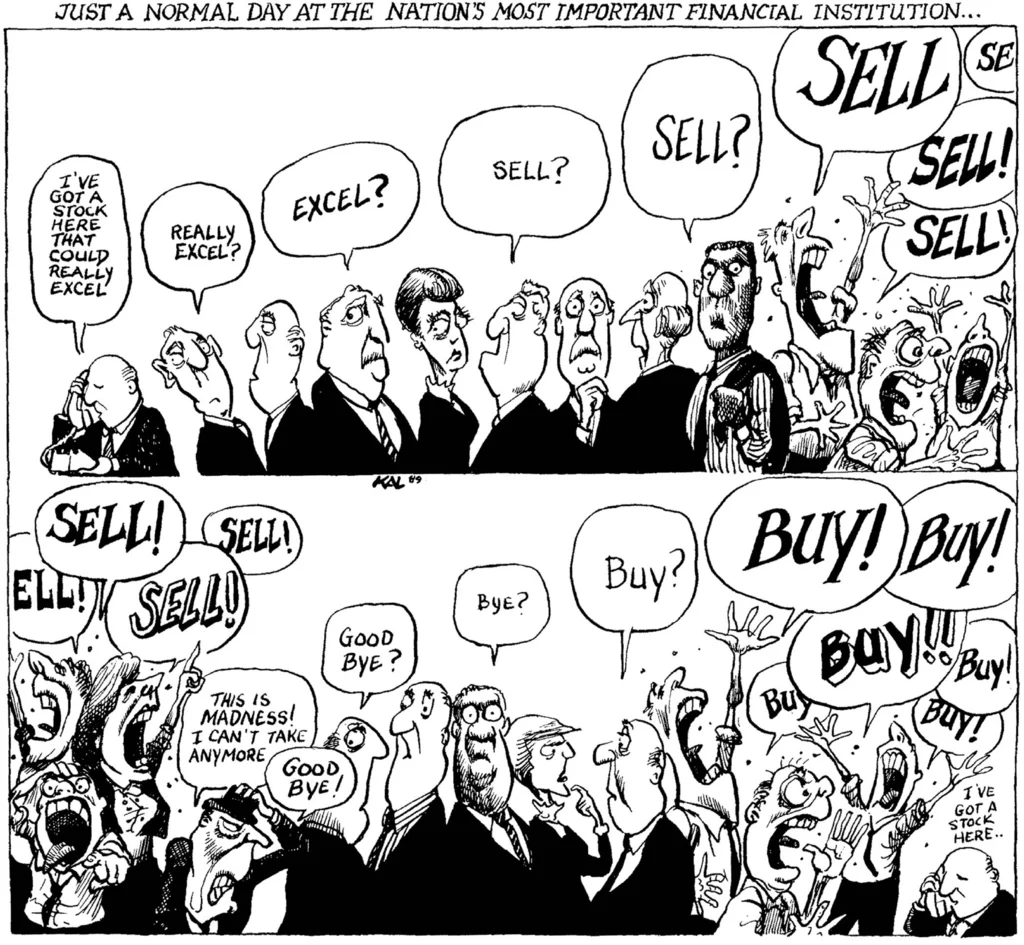
Back to Marc who praises Elon Musk as CEO for having high preference for ground truth in comparison to IBM. This is a scaled-up equivalent of his introspection claim: that information several layers later ends up distorted whether in large companies or one's internal experiences. And similar cascades of distortion exist in markets, too. Seeming different at first, the common pattern in these cascades of distortion is the process of induction. Induction is what philosopher Karl Popper called this error-prone dynamic Marc describes. Popper's solution to the problem of induction is knowledge creation via processes of conjectures and criticisms. I much prefer Popper's conjectures and criticisms framing over the more common phrase first principles thinking, as the inclusion of criticisms provides an error-correcting mechanism for fallibile first principles one may have.
Easter egg: Claude Shannon proved that arbitrarily reliable communication is achievable over noisy channels. But what's the difference between information and knowledge?
comments section
~$1/comment: pay with card · pay with Ethereum