Universal Basic Incoming
April 18, 2026
There was this guy Vilfredo Federico Damaso Pareto, known for what's commonly called the 80-20 rule; the Pareto distribution. There's a few realizations I've had about it these past few years that were mind blowing to me. Maybe they are obvious to others but I want to repeat them here in context of a topic that's being discussed nowadays: universal basic income; or a variant of the idea Elon Musk has been pushing called universal high income.
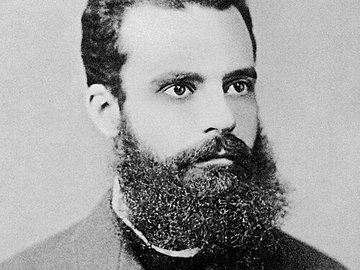
Back to Pareto who finds out somewhere between mid-1800s and early-1900s that wealth seemed to be power law distributed everywhere he looked. Wat means? Means everywhere he looked, 20% of the population controlled 80% of the resources. I'm rough on the edges here so if you have a better explanation please email and correct me. What I didn't realize about this Pareto business until maybe the last few years is the following: 1) that this 80-20 "rule" is multi-scale; meaning 5% of the population hold 95% resources, 1% hold 99% and so on; and 2) that this multi-scale behavior is a naturally occuring, universal phenomena down to the level of quantum physics and up. What?
Probably the only thing more astonishing to me than facts 1) and 2) is what I've been hearing David Deutsch say lately: that this might-is-right-style power-law phenomena is the general case until and unless one has constructive explainable knowledge to invert it. In other words, multi-scale power laws or Pareto distributions are the natural base case...but one can construct their inversions using explainable knowledge with causal power. Again. What? That's incredible! I believe Deutsch is writing his next book on this specific topic and I cannot wait to be honest.
Wat mean for universal basic/high income?
Politicians like Bernie Sanders simply mean we hand out monthly checks to counter unemployment caused by AI when he uses the phrase. But someone like Elon Musk pairs his vision with massive amounts of automation and robot manufacturing via AI-enabled productivity. Same-same, but different. But still same.
The difference in Bernie and Elon is what Deutsch is talking about. If explainable knowledge can invert naturally occuring power laws, and we can automate explainable knowledge via AI and its applications via robotics, basically we can go down a path where we constantly flip naturally occuring power laws over and over until there is massive abundance, so much so that there's deflationary pressure on the economy that needs to be upregulated via government handouts. So Elon and Bernie are arriving at similar-sounding conclusions via different visions and construction mechanisms. Among the two, I like Elon's vision of robots-in-factories better; though they both ultimately sound kinda scary; because things will inevitably be volatile along the way. And volatility scares people.
The idea that we can automate power law flips via causal knowledge doesn't mean power laws go away by the way, it just means flipping them is now automated and thus constant. I think people need status, drive, purpose, meaning, etc. and the need of doing better than their neighbors is one tough nut to crack, no matter how many checks the government distributes. So whether it's universal basic income or universal high income, Pareto distributions are here to stay; they're just flipping at a much faster rate going forward via robots and AI. Maybe the problems of the future will be less about having enough food to eat or money to pay one's bills, but that of meaning and more complex topics than that currently discussed solely by fancy intellectuals.
comments section
~$1/comment: pay with card · pay with Ethereum