Lighthouse not Bucket
April 25, 2026 ·
In his book Philosophiæ Naturalis Principia Mathematica, Isaac Newton wrote about a thought experiment involving water in a bucket hung by a cord tied to a ceiling. The cord by which this bucket is hanging is first twisted sufficiently, then released. Newton categorizes the resulting spiral motions into three: first, the bucket starts to spin, then the water in the bucket starts to spin...eventually syncing with the bucket's spin, and ultimately the bucket comes to rest while the water continues spinning.
Newton's bucket experiment has many deep insights to ponder. Concavity, rotating motion, relativity, you name it. There are seemingly infinite things one can discuss about it. When I worked in oil & gas, I always found the smartest engineers to be those concerned with rotating equipment and from them I learnt that all machines, no matter how seemingly complex, like the kind you find in refineries, natural gas turbines, mines and steel mills, can be understood and controlled if only one understood the simple rules underneath governing their motions and rotations. Spinning buckets are an incredible metaphor.
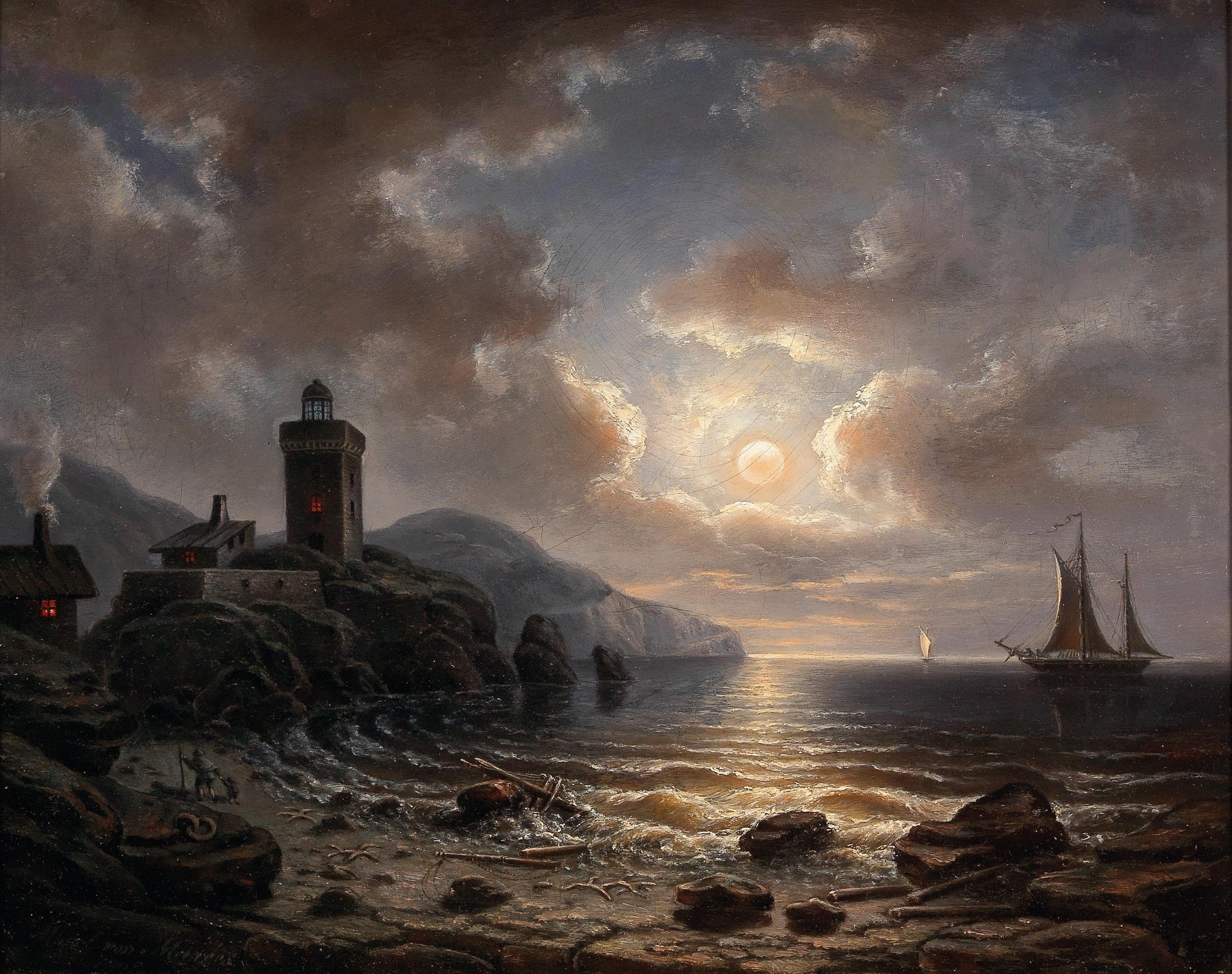
Fast forward, I heard via David Deutsch an even better metaphor, originally by Karl Popper, that I wanted to share today. Popper in his bucket theory of the mind criticized buckets as a metaphor for knowledge, asserting that we as humans are not passive acquires of knowledge akin to buckets in which water is filled via an external source. Instead, he proposed that knowledge creation is an internally generated process akin to a searchlight. I could be wrong but I believe Deutsch uses the word lighthouse which I like even better than searchlight, because a lighthouse at least in my mind creates an image of absolute space.
In any case, the more time passes the more I find myself appreciating this metaphor upgrade. Everywhere I look, people assume knowledge works as buckets: in education, in professional life, in consumption of media, you name it. But instead, the metaphor of a searchlight in a lighthouse lets one know that they aren't just a passive observer with no control over what's being put inside their mind. Rather, we’re an active force to create, modify, and test knowledge based on programs within. How cool.
Albert de Marees' Coast at Night with Lighthouse here.
comments section
~$1/comment: pay with card · pay with Ethereum